

Let’s Help Prepare you for YOUR Retirement:
No two retirements look the same - yours won't either. Below, you'll find a selection of articles written to help you put words to something you might not have realised needed articulating. Sometimes the hardest part isn't finding the answer; it's not knowing there was a question worth asking in the first place.
If you'd like a feel for how I think about retirement - or a sense of what working together might actually be like before you commit to a call - start with the blog. It's the closest thing to sitting in on a conversation with me.
Some observations about different TYPES of clients
In other places dogs go barefoot too. Basque Proverb.
People are unique. Yet, as the proverb reminds us, people also have similarities: height, age, hair colour and many more. In particular, what can I say about my retirement coaching clients?
Certainly every one of my clients is an individual. But, in more than ten years’ experience as a retirement coach, I have observed differences. (My observations emerge during our six one-hour sessions together, and they help me guide the client towards their idea of a fulfilling retirement). In fact the differences can be much more informative than the similarities. What do I mean by that?
Here are some client approaches to retired life that highlight difference rather than similarity. I hope they resonate for you:
· Wanting a life that is busy or a life that is balanced,
· Setting a level of creative endeavours versus consumption of content,
· Planning a big social life or a modest one,
· Engaging in lots of self-reflection or not so much,
· Doing paid work or volunteering (neither is also a possibility).
I don’t judge any of these outcomes, as they have been extracted from within the client. Clearly they reveal personality traits that run deep.
My only point is to stress that self-reflection is a net benefit and, in fact, retirement coaching won’t succeed without it.
If you want to know more you know where to find me.
Jon Glass Retirement Coach
Could retirement coaching be of value to YOU?
Retirement arrives to each person as a major transition in life. Certainly retirement is about money and health, but it’s also about a whole lot more: which is to find meaning and purpose in retirement. The question is: who might benefit from engaging a retirement coach to help them find their personal meaning in retirement?
Let’s admit at the outset that some people retire from work with a pre-defined sense of meaning (e.g. Golf, Gardening, Grandparenting) and off they go. Good luck to them. For the purposes of this article we can ignore that group.
However, there are two other groups:
1. Those who seek help from a retirement coach. They get it: that finding meaning in retirement is critical to having a fulfilling retirement, and that it’s a good idea to get help on this new journey. Their coach will, through questioning and listening, guide them to locate their own meaning. Along the way issues such as:
· finding a routine in retirement,
· constructing a new identity,
· knowing how best to deal with all the free time,
· constructing a social life,
· giving back to society,
· learning new skills,
· creating something ,
will take the stage.
Moreover, because they made the discovery themselves (albeit with help) it will feel more genuine.
2. The second group is much harder to understand. These are the people who would not naturally seek a coach but, in fact, they might need one. It’s just that they don’t know it.
Here are some possible reasons to explain that reluctance:
· Lack of Information. The concept of retirement coaching is still new and not well understood in our culture. If retirees don’t know such help exists, they’re unlikely to seek it out (on the other hand, everyone who experiences a blocked drain in their house knows that there are plumbers to call).
· Stigma. Some might view the act of seeking help as an admission of weakness. If they successfully managed the challenges of their working life they may believe they have the natural skills to beat the challenges of their retirement and don’t need help. They may be wrong.
· Generational Attitudes. For previous generations, retirement was a milestone that came before a short span of retired life. This has changed, as we now live a lot longer. However these generational attitudes change at a slow pace.
These reasons, individually or taken together, may explain the inhibitions of the second group, but at what cost?
There are several that may arise.
· Declining Mental Health. There is research to suggest that a long period in retirement - in the absence of meaning and purpose - can lead to anxiety, cognitive decline and depression.
· Relationship Breakdown. Partners, family and friends may adopt a negative attitude to those failing to live their best retired life.
Conclusion
In summary, a poorly devised retirement strategy may cause you to waste the early, healthy years of your retirement. Wouldn’t it be smart to get help in order to construct a fulfilling and joyful retirement for yourself?
I’d love to know what you think.
Dr Jon Glass Retirement Coach
E: jon@64plus.com.au
On discovering your identity in retirement
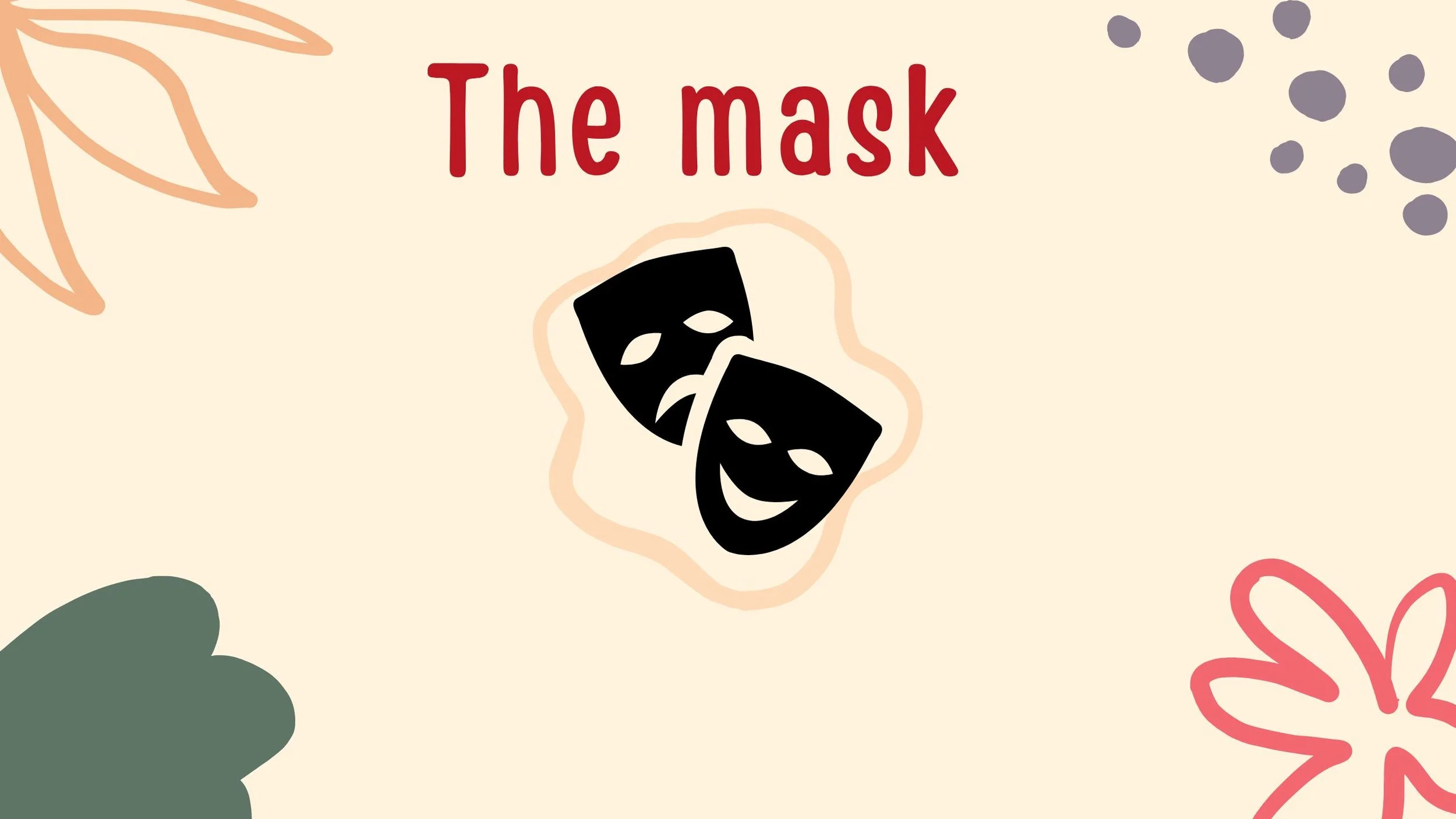
In the world of theatre a mask conceals. It hides the actor’s face and intentions. But outside the theatre, we all wear masks too—at work, in social settings, even at home. So what does this have to do with retirement?
Retirement is a gift of time that allows self-reflection and a chance to remove our mask and learn more about ourselves. With the mask off, we begin to see our identity more clearly.
Here are just a few examples of what we might find:
1. Social Circle: Without the social scaffolding of work, some retirees discover that their circle of friends is smaller than they imagined.
2. Mental Void: Others realise that work provided the lion’s share of their mental stimulation—and now that it’s gone, they feel lost.
3. Hobbies: For some, retirement brings an uncomfortable truth—they’ve never cultivated interests outside their job.
4. Alpha People: And then there’s the high-achiever who, mask removed, clings to an intensity—filled retirement of relentless activity, as if afraid of stillness.
These discoveries - while they may be confronting - are a positive. They are invitations to treat your retirement as a canvas for re-fashioning your identity. And with the right guidance, it can become the most authentic chapter of your life.
As a retirement coach, I help people navigate this transition to retirement with clarity and confidence. I invite you to reach out to me at the website below.
Jon Glass – Retirement Coach
64plus.com.au

Three tips for adding spice to your retired life
Retirement is a time to enjoy the dividend of happiness that comes your way once you stop working.
However, some find it difficult to fully engage with all the free time, lack of routine or simply not having direction from a boss. We all experience retirement differently. Here are some tips to add spice to your retirement.
1. Reflect on your identity in retired life
What does this mean you ask? Well, you had an identity when you worked, whether as a bus driver or prime minister. Now do you want to be known as a “retired person”? Probably not. So will you be a volunteer, an oboe player, a bushwalker? The choice is yours to make.
2. Make a new friend
You may already have lots of friends, but the chances are that during your busy work life friendships waned and lapsed. OK, why not make new friends. Impossible? No. Challenging? Yes. Perhaps join a club or take up a hobby or do a course. That way you have a chance to meet new people and who knows, make a friend or two.
3. Visit a part of your town you’ve never seen before
It’s so easy to go stale in retirement, living under a predictable regime and finding that you are getting bored. Not good. Here’s a simple trick to engage your curiosity muscle: visit a part of your town/city you’ve never been to and observe. Who knows what you’ll see.
Please visit:
https://www.64plus.com.au/contact
To get more ideas. The door is open.
Jon Glass Retirement Coach.
A podcast with Dr Jon and Bec Wilson
It was a pleasure joining Bec Wilson’s Prime Time podcast to chat about making an effective emotional transition to life after work. We covered:
✅ Taking a portfolio approach to new activities in retirement
✅ The importance of designing new routines and rhythms that work for you
✅ Nurturing social connections and remaining open to new experiences
Have a listen below:
https://podcasts.apple.com/us/podcast/finding-your-new-rhythm/id1710995058?i=1000710301833
A story and a fact
A friend told me of her recent experience at a supermarket. As she was wheeling her trolley to the carpark a woman, a complete stranger, trollied up to her and started to speak.
The woman motioned towards her husband, who was walking at some distance behind her. She complained that since he retired he was always with her, driving her mad. The subtext was that the woman had been doing the shopping for decades, perfectly content to be on her own. Now he was always there!
A propos of supermarkets, I believe that in the Netherlands there are special checkout lanes where the checkout person will happily engage in a conversation with you, if that is what you would like. My guess is that this performs a social role to help lonely people. The Dutch also have public houses called “chat houses” in which strangers and friends can meet and talk. Food for thought.

A positive attitude about aging could improve your health outcomes. So claims Harvard research.
People with more positive attitudes about growing old tend to live longer and healthier lives than those with negative thoughts about aging, according to recent research.
A study of 14,000 adults over age 50, co-authored by experts at Harvard T.H. Chan School of Public Health, found that the people who had the highest satisfaction with aging had a 43% lower risk of dying from any cause over a four-year period compared with those who were the least satisfied. The study also found that people more satisfied with the aging process had lower risk for conditions such as diabetes, stroke, cancer, and heart disease; better cognitive functioning; were more likely to engage in physical activity and less likely to have trouble sleeping; were less lonely and depressed; and were more optimistic with a greater sense of purpose.
“There’s a connection between mindsets and health behaviors,” said Eric Kim, an assistant professor of psychology at the University of British Columbia and an affiliate researcher at the Lee Kum Sheung Center for Health and Happiness at Harvard T.H. Chan School of Public Health, in an August 19, 2022 article in American Heart Association News. “One leads to the other.”
Kim offered suggestions on how to develop a more positive attitude about aging:
Maintain a sense of purpose by finding projects that align with your values
Reject negative stereotypes about aging, such as the idea that poor physical health is inevitable for older adults
Stay socially active, for instance by joining a club or getting involved with a community organization
Try new activities or teach skills or crafts to others
Things you might miss from your worklife once you have retired

Things you may miss from work
As I always say with regard to retirement: you won’t know what it’s like till you get there. You may find that statement puzzling, particularly if retirment is a life-destination you have been craving for years, but please bear with me.
To set the scene I have a question. The question I want to pose is this: which aspects of your work life will you miss when you retire? Before you rush in and say “Nothing. I’ll be thrilled to get out of there and turn the page to a new chapter of my life”, let me challenge you.
I choose to challenge you with examples, albeit a small sample of three, as each person’s experience will look different.
1. FIP
I heard this acronym recently on a podcast. FIP stands for Formerly Important Person (I use the acronym RDS. Relevance Deprivation Syndrome, but they are the same). Now this may not apply to you but in my work as a retirement coach I often witness it, because if you were in any position of seniority at work then in retirement you will quickly notice that your phone is not beeping and your email has gone quiet. You may rejoice or weep at this, and as I don’t know you I can’t tell, but I predict you will have a reaction.
2. Identity
Whether you drove a train or had a high political position you certainly had an identity at work that informed strangers of what you did for a living. In retirement do you want to be known simply as “that retired person”? I doubt it.
3. Being valued by others
I’m sure your work colleagues (if you had them) valued your work. If not you probably didn’t last in the job. So isn’t being valued a good thing, didn’t it make you feel worthy? Where will you derive that feeling of being valued in retired life?
I’ve outlined a few aspects of work you may miss. There are many, many more I could have chosen, but if any of these three resonates with you, what will you do about it?
That’s a question I’d be happy to answer if you email me at jon@64plus.com.au
Jon Glass Retirement Coach
Weather and Retirement

Seriously, can there be a connection between weather and retirement? I'm not saying there is. I want to employ weather as a metaphor rather than actually connecting it to retired life. What is my metaphor?
Let me explain. When I worked full-time there was a constant stream of activity, without end. So in the language of the weather, it rained every day without stop (except weekends and holidays). As a retired person I have discovered something different.
But first a few facts about me. The truth is that I am semi-retired. What do I do with my time? First, I'm a retirement coach; but you knew that already. In addition to that I have several hobbies, such as: learning languages, learning to play the piano (badly), I have my own podcast (called Talk About Friends), I do some charity work and - oh I almost forgot - I'm a grandfather. This is called a portfolio life in retirement.
All that makes for a busy life. Well sort of. It occurred to me that there are days (and today is such a day) when not much is happening for me. Back to the weather, I call that a day of full sunshine. That’s a welcome relief and gives me a chance to relax.
However sometimes I find myself mildly anxious with that lack of activity because, above all, I want to lead an active portfolio life. But here’s the lovely thing. Just as night follows day, so rain follows sunshine and some days later I always find myself busy and fully active in my portfolio again.
This is the benefit of a portfolio life. It gives structure, routine and a level of predictability about how busy you will be. Let me stress that a good portfolio life in retirement is one in which you are as busy as you choose. That is a consequence of working out your meaning/purpose in retired life.
Please email me at jon@64plus.com.au if you want help to construct your portfolio life in retirement.