

Let’s Help Prepare you for YOUR Retirement:
No two retirements look the same - yours won't either. Below, you'll find a selection of articles written to help you put words to something you might not have realised needed articulating. Sometimes the hardest part isn't finding the answer; it's not knowing there was a question worth asking in the first place.
If you'd like a feel for how I think about retirement - or a sense of what working together might actually be like before you commit to a call - start with the blog. It's the closest thing to sitting in on a conversation with me.
Boredom 3.0: the wrap-up
In previous posts we discussed boredom:
- as the state of mind that is the opposite to activity
- how the too-easy remedy is to find distractions such as the internet.
But looking at the second point, I warned that this antidote is not necessarily the right medicine. Apparently Kierkegaard the Danish philosopher said that keeping busy is the impulse to escape the present. By the way, he is the only philosopher I am aware of whose face appears as a decal on the tail of a national airline!
In terms of the senses it is perhaps taste that most closely reflects boredom. When we are bored perhaps the world no longer tastes good. Certainly eating food, particularly more than you need for your body, is something you might do when bored.
But what if boredom is the creative time that you can use to think through postwork issues such as:
- do I want to leave a legacy?
- do I want to make a difference in the world?
Retirement: You won't know what it's like till you get there.
Boredom 2.0
In the post last week we saw a working definition of boredom: more about what it isn't; why it might occur in retirement; and what to do and not do with boredom.
Boredom may be defined as the search for something; but you aren't sure what that might be.
Go with it to see where it leads.
Be careful not to sabotage the gift of boredom with constant distractions, as mentioned last week, for example with the internet, FaceBook etc.
My favourite quote on boredom comes from the German philosopher Walter Benjamin:
“Boredom is the dream bird that hatches the egg of experience.”
It merits a moment's contemplation.
Retirement: you won't know what it's like till you get there.
Boredom 1.0
What is boredom?
It has many definitions and aspects. It is easier to define it by its exact opposite, which comes when you are so busy you can't scratch yourself.
In retirement you may find yourself getting bored, with the absence of activity. The whirlwind of work having stopped.
Perhaps boredom is a name for the activity (non-activity) of taking the time to find out what interests you.
Beware of distraction, which comes in the form of incessant checking of mobile devices - Facebook, email, LinkedIn etc. - as it may be nothing more than a deferral. A deferral of the search for your meaning. Let the boredom take over and honour it with some time in your day, I suggest.
Retirement: you won't know what it's like until you get there.
There is retirement and there is retirement!
In an article I read recently (*) the authors teased out some interesting definitions of retirement:
1) A total exit from the workforce;
2) A reduction in hours worked/earnings;
3) Receipt of some sort of pension;
4) Transition from full-time to part-time work, perhaps with a career change involved;
5) Self-assessed as retired;
6) Left main employer;
7) A combination of some of the above.
WHICH OF THESE IS/WILL BE YOU?
(*) Denton, F and Spencer, G Social and Economic Dimensions of an Ageing Population. 2008.
Wexit; or what happens after you leave work.
Introduction
It all goes back to the Greeks. A few years ago Greece was a possible candidate as the first country to leave the European Union. It didn’t happen then; it may happen in the future, it may not.
A new word
The word that the world’s press fell in love with at the time was Grexit, as it seemed to describe the prospect quite well; and now we have Brexit. So, what I would put forward as the word to substitute for that difficult word “retirement” – so freighted and emotional – is Wexit – or Work exit.
Just as with a decent Grexit or Brexit in prospect, Wexit demands answers to certain questions such as when, how, why and what? However it’s unlikely that the average Wexit will involve foreign ministers, trade delegations, lawyers, or prime ministers.
Answers to questions
Instead there will be employers, colleagues, superannuation consultants – oh and don’t forget family and friends. But there is much more at stake than the Wexit. That may turn out to be quite simple, particularly if it happens to you: employed one day, out of work the next.
What really counts is what happens next; so the Wexit is really the first part of another process which consists of how you deal with the ensuing 30 or so years of life. And this deserves thought and, I would say, help.
Who will you seek help from when your Wexit happens, or now that it has happened?
Ikigai, or, why get out of bed in the morning?
I believe that “ikigai”, a Japanese word, translates loosely as “why get out of bed in the morning”. To put it differently, what is the meaning of your life. Let’s divide life into phases:
Phase 1: School.
If a child doesn’t want to get out of bed in the morning to go to school then there is almost certainly going to be a parent who facilitates.
Phase 2: University or Technical College.
In this instance, the parent may be less involved than the young adult, but there is still a motivation to get out of bed, even if it’s not sufficiently strong every day.
Phase 3: Work.
What needs saying? How many bosses/employers will tolerate lengthy and unexplained absences from work?
Phase 4: Postwork.
Now it gets interesting. What is your motivation to get out of bed?
What is the meaning in your life?
A coach can help.
Your legacy in retirement
What is a legacy?
Legacy is a concept with two senses. The better understood sense is that of a financial bequest, perhaps an inheritance, from one generation to the next. But legacy also has a second, related meaning.
That second meaning comes about because each of us leaves a trace in the world, and some of that may be by accident, but if it is by design then that is a specific sort of legacy that we can think about.
Legacy and postwork
Supposing you are already retired, then your work legacy is effectively sealed in a box, a box that when opened may release fair and foul odours, but there is not a whole lot of useful work you can do on that legacy, once you have ceased employment.
Now that you are retired you can think about your legacy (trace in the world) in at least two ways.
Legacy number 1
First you can ponder the ways in which you helped or can help other people. This may come through charity work, through devotion to family or perhaps through friendship. You now have the time and space to work on this, if you choose.
Legacy number 2
The second legacy is related to the first but subtly different, it’s the things you achieved for yourself – perhaps selfishly, perhaps altruistically – but which define the way in which people will remember you: she was a good golfer, he was a fine cook; he enjoyed classical music, she was always friendly to the neighbours.
Conclusion
Now the sense of legacy is getting quite diffuse as compared with a simple endowment of money to a specific person. In some estimations this is a very important area for self-analysis, if you choose that path, but some may not. Perhaps you need help?
Transitions
Why are transitions important? Are they a hindrance or a help? READ ON.
The meaning of a transition
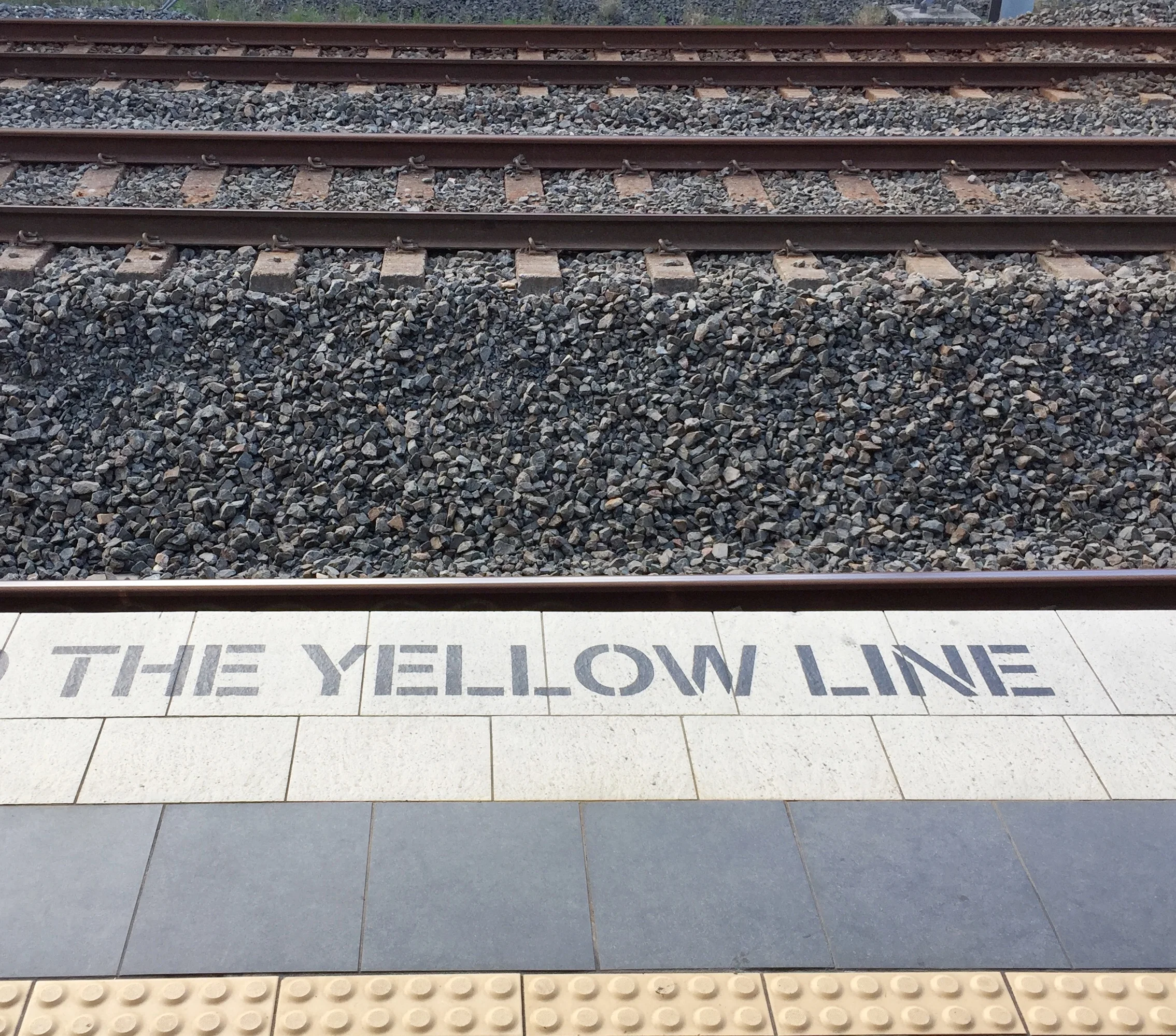
Transition is an interesting word. It has a very abstract sense, almost cold and mechanical, that indicates movement. But it also connects to the word passage, which I think is much warmer and more emotional, and can bring up associations that might mean tight or difficult, or easy and wide; depending on context and interpretation.
However, with transition to or towards retirement, I would like to concentrate very narrowly on that emotional engagement that a person will have with self, family, friends, work and any other number of agents as he or she negotiates that transition.
Emotional engagement
For example, it may take time to realise that when you don’t kit up for work on Monday morning you have a lot of time on your hands and a lot of space in your place of residence, and that both need to be negotiated.
And so, in this transition you may find yourself in one or several of these states of mind:
1) Looking back and missing what you once had as a worker in your job.
2) Going through the transition and either passing to a happy retirement or literally “going through”, in the use of that phrase, some kind of tortuous passage.
3) Going to a goal where you have defined your life’s activities in retirement. Not that having goals is going to suit everyone. Some personality types are goal-driven (that’s me), others are happy to take it as it comes. There is no correct answer here. You may recognise which category you belong to from thinking about your habits at work.
Conclusion
Transition to retirement is not an easy emotional concept to grasp but its utility is clear. It is the passage to the green pastures of a new life postwork.
Thinking about retirement
What do you think when you hear the word retirement? This is not a straightforward question such as: “what do you think when you hear the word ice-cream?” with its obvious associations to food and pleasure. There are many different ways to think about retirement.
One answer to the question is to say that retirement is an event in a person’s life at a point in time, a sharp break from work. But the counter to that is to say that retirement is a transition, a phase to pass through perhaps akin to mourning, which eventually comes to an end. I think that retirement is both an event and a transition but that doesn’t cover off all questions that may be asked.
The next thought is that retirement will affect people differently for a number of reasons. Retirement, and how a person feels about it, will derive from how they perceive their role in society, in their family and in their community. We are all different in terms of our backgrounds even if it’s possible to locate some common features such as status, size of family and where we live.
Even if two people declare that retirement means that they can spend time working for charitable causes that is not the end of further investigation. I can ask how large is their commitment in time and energy, how does their charitable work connect to their life before retirement, if at all, and what is their motivation: to the extent that they have even thought that through.
Returning to the earlier point of retirement as an event or a transition, it may be that that question gets trumped by a deeper process. That is the process that defines a person’s whole life and purpose. Perhaps on the surface a person went from work to no work, but that’s not the end of it. For example, one person may dedicate a whole life to giving to society, another to nurturing and enhancing his own wealth, another defines himself by his family so that his job is merely a means to that end. In all these cases you could say that there is something deeper and more fundamental going on than an event or a transition.
Of course it’s hard to think that a person’s retirement is not connected with other people. So just as the dominant arrangement in our society has it that people have families, then the family will likely place constraints on the retirement process. One such constraint may be financial, and certainly we can’t ignore money considerations. Another constraint can be the relational structure of husbands, wives, parents, children, grandchildren or even community.
So far, we have considered some of the enormous variability that lurks behind the plain scrim adorned with the word “retirement”. We haven’t even mentioned gender, family and cultural background that again will play into the differences that are possible underneath such a simple word. Physical and mental health can also loom as significant factors in the retirement discussion. All this said, defining ice-cream seems quite uncomplicated.
Finally, there is the matter of choice or agency. That is to say, in retirement each person can make decisions based on a mixture of facts, logic, emotions and perhaps coercion by others, that will lead to an outcome that is the right one for them. Of course reaching that answer is not always easy.
Who ya gonna call?
P.S. Some of the ideas above were stimulated by reading a recent article by Hanna van Solinge.
The o'clock syndrome and retirement
What is the o’clock syndrome? It’s the imperative, the must-do, that presents itself in the world of work when you are a full-time worker. At each hour, possibly each half hour, there may be a meeting, an appointment, a reason to leave the office, any obligation whether regular or occasional. You know the feeling, dash of a quick email or two, look at some document, quickly phone someone. Before you know it, you are in the swim of that o’clock obligation.
You could call this the daily rhythm of working life, particularly if you work in an office.
Retirement presents a different face of time. There is a chance to make your own daily and weekly rhythm, and engage in projects rather than in the piecemeal demands mentioned above. You can even take over the control of time by, for example, finishing an activity so that you can go for a walk, cook a meal, read a book, watch TV, relax.
In a broader sense the Monday-to-Fridayness of the working week gives way to a sense that even the weekend’s halo has slipped and is in danger of becoming irrelevant.
In retirement, full or partial, the phone rings less often. You don’t have to keep email alive all day with its incessant pinging of the arrivals (although this may not be easy to do). The bustle of people around you diminishes (although you can choose activities that involve people).
Perhaps your home becomes more important as you are spending more time there than ever before. In this way, the o’clock syndrome gets replaced by what I call the sundial in the lounge room: you have much more control over the flow of your activities and projects; with less attention to the time of day. Certainly, there is little need to notice the chiming of the hour.
The choice of activities becomes yours to make. Experiment and see what works for you. By the way, you can change your activities anytime that suits you, without asking permission.